22 March 1894
Born at Noapara, Chittagong district
Born into a Bengali family in Raozan. His father was a teacher; sources give the name variously, and this site does not choose between them.
Chittagong, Bengal Presidency · 1894–1934
He taught mathematics at a school in Chittagong. On the night of 18 April 1930 he led some sixty-five people in seizing a district’s armouries, cutting its wires and declaring a provisional government of free India. The British hanged him four years later.
Scroll to enter
01Opening statement
01 Opening statement
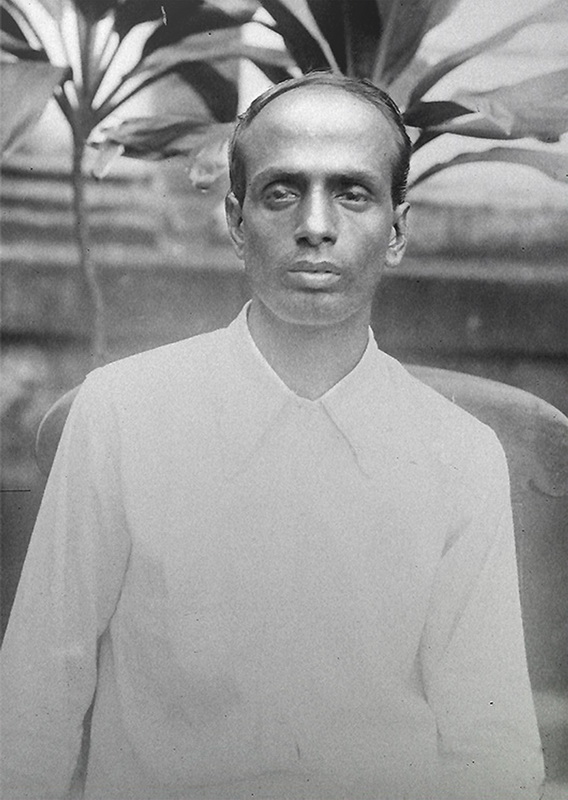
Surya Kumar Sen was born on 22 March 1894 at Noapara in the Raozan area of Chittagong district, then part of the Bengal Presidency and today in Bangladesh. He trained as a teacher, taught at a national school in Chittagong town, and was known for the rest of his life by the name his students gave him: Masterda — master, teacher, and da, elder brother.
That ordinary title is the point. Surya Sen was not a soldier and did not command an army. He was a mathematics teacher who built, over roughly fifteen years, a disciplined political network out of the students, clerks and young men of one coastal district — and then used it, on a single April night in 1930, to take physical control of the machinery of British authority in Chittagong.
The rising failed in every practical sense. The armouries yielded rifles but almost no usable ammunition; the town was retaken; most participants were killed, imprisoned or transported. What it did not fail to do was demonstrate, in front of an empire and its newspapers, that a British Indian district could be taken and held, however briefly, by people the administration had classified as schoolboys.
Death is knocking at my door. My mind is flying away towards eternity…Surya Sen · final letter to his comrades, 11 January 1934
This letter, written the day before his execution, is the one statement widely reproduced in his own words. It survives in English translation from the Bengali in published accounts of the uprising rather than as a facsimile document. Elsewhere on this site, where a saying cannot be traced to a reliable text, it is paraphrased and identified as such rather than presented inside quotation marks.
02Life in context
02 Life in context
The world he was born into
Four decades of partition, repression and constitutional disappointment shaped the province in which Surya Sen grew up. These are the conditions historians point to — not as excuses, but as the political weather of his generation.
1905
The partition of Bengal
Lord Curzon’s division of the province triggered the Swadeshi movement — boycott of British goods, national schools, and a generation of Bengali students politicised before they finished their education. Surya Sen was eleven years old.
190608
The secret societies take shape
The Anushilan Samiti and, from it, the Jugantar group built underground cells across Bengal committed to armed action against colonial rule. Both organisations would later supply Chittagong with its politics, its recruitment methods and its discipline.
1919
Rowlatt, Jallianwala Bagh, and the collapse of trust
Emergency wartime powers extended into peacetime, followed by the Amritsar massacre, destroyed the argument that constitutional reform would arrive on its own. Across India, moderate nationalism lost a generation to direct action.
192022
Non-Cooperation, and its sudden withdrawal
Gandhi’s mass movement drew Surya Sen in as a Congress organiser in Chittagong. Its abrupt suspension in February 1922 left thousands of young volunteers mobilised, trained in organisation, and without a programme. Many of Chittagong’s later revolutionaries came from exactly that cohort.
1925
The Bengal Criminal Law Amendment Act
Detention without ordinary trial, and special commissioners empowered to try political cases. It is the instrument that would imprison Surya Sen between 1926 and 1928 — and, in 1933, the instrument that would sentence him to death.
The making of a revolutionary
03 The making of a revolutionary
The turn is documented and unromantic. In 1916, while reading for his BA at Berhampore College in Murshidabad, Sen was drawn into nationalist politics by a teacher, Satish Chandra Chakrabarti, and recruited into the revolutionary underground — the Anushilan Samiti, and later the Jugantar circle. He was twenty-two.
He came to Chittagong in 1918 and began teaching. In the same year he became president of the Chittagong branch of the Indian National Congress, and he worked through the Non-Cooperation movement as a Congress organiser. For most of the 1920s these two identities ran side by side: the respectable district Congressman, and the man quietly assembling a network that Congress did not control.
Two dates mark the hardening. In December 1923 he took part, with Ambika Chakrabarty, in the robbery of the Assam-Bengal Railway treasury at Chittagong — funding, not spectacle. And between 1926 and 1928 he was imprisoned without an ordinary trial. He was released towards the end of 1928 and returned to the district a more careful, more senior figure than the one who had left it.
Why this district
Chittagong was the eastern seaboard’s working port, the terminus of the Assam-Bengal Railway, and a hub of telegraph and telephone lines running inland. It carried tea, jute and troops. It also sat far enough from Calcutta that reinforcement took time — hours that a plan could be built around.
Take the guns.
Cut the wires.
Stop the trains.
The plan treated the district as a system rather than a target. Seize the two armouries; sever telephone and telegraph communication; disrupt the railway. If all three held, Chittagong would be cut off from the rest of Bengal for long enough to matter.
05The armoury raid
05 The armoury raid
18 April 1930 · 22:00
18 April 1930
The date was chosen with care. 18 April 1930 was Good Friday; the town’s British residents were expected to be at leisure, and the European Club at Pahartali — one of the night’s objectives — was expected to be full. It was not. The attack there found few people present.
Elsewhere the plan worked. A group under Ganesh Ghosh took the police armoury; a second group of about ten under Lokenath Bal took the Auxiliary Force armoury. Telephone and telegraph wires were cut and rail movement disrupted. Rifles were captured in quantity — and then the raiders discovered they could not find the ammunition to go with them.
At the police armoury Surya Sen took a military salute, hoisted the national flag and proclaimed a Provisional Revolutionary Government. It is the moment the uprising is remembered for, and it lasted a matter of hours.
Both armouries are taken. Arms are seized; ammunition is not located.
Telephone and telegraph lines are severed and train movement is interrupted, isolating the district.
Unable to hold the town, the raiders leave Chittagong and move into the hills outside it.
British troops locate and engage them. Twelve revolutionaries are killed. The survivors scatter.
06The people around him
06 The people around him
Not a following. A leadership.
Surya Sen planned; other people commanded, carried, sheltered and died. Most were in their twenties. Several were still students. Two of the movement’s most consequential figures were women, in a revolutionary culture that had until then largely excluded them.
Ganesh Ghosh
Led the group that captured the police armoury; escaped, was arrested and transported to the Cellular Jail.
1900–1994
Lokenath Bal
Led the group that took the Auxiliary Force armoury and commanded at Jalalabad hill, where his younger brother was killed.
1908–1964
Ambika Chakrabarty
Led the destruction of Chittagong’s communications on the night of the raid; sentenced to death, commuted on appeal.
1892–1962
Pritilata Waddedar
Led the attack on the Pahartali European Club on 24 September 1932 and took cyanide rather than be captured.
1911–1932
Kalpana Datta
Reconnoitred the Pahartali target, was arrested in 1933 and tried alongside Surya Sen; released in 1939.
1913–1995
Tarakeswar Dastidar
Directed what remained of the movement after Surya Sen’s arrest; hanged with him on 12 January 1934.
1909–1934
1930 – 1934
He was not caught quickly. He was caught because someone told the police where he was.
08Legacy
08 Legacy
Chittagong is remembered in two countries. In Bangladesh, halls of residence at the universities of Dhaka and Chittagong carry Surya Sen’s name. In India, a Kolkata street and a Kolkata Metro station carry it, and India Post issued a commemorative stamp in his honour in 1978.
The written record was largely built by the participants themselves. Kalpana Datta’s Chittagong Armoury Raiders: Reminiscences appeared in English in 1945; Ananta Singh wrote several Bengali volumes on the group. The most substantial modern account, Manini Chatterjee’s Do and Die: The Chittagong Uprising 1930–34, was published in 1999 and reached a wide readership.
Cinema arrived late and mattered. Two Hindi films released within two years — Khelein Hum Jee Jaan Sey (2010) and Chittagong (2012) — brought the raid to audiences who had never encountered it in a classroom.
These are not the same kind of evidence. A tribunal record, a comrade’s memoir and a feature film sit at different distances from the events. The Legacy page keeps them apart on purpose.
Chronology
The full timeline runs from his birth in 1894 to the release of the last Chittagong prisoners from the Cellular Jail in 1946, and can be filtered by period.
22 March 1894
Born into a Bengali family in Raozan. His father was a teacher; sources give the name variously, and this site does not choose between them.
1916
While reading for his BA in Murshidabad he is drawn into the revolutionary underground by his teacher Satish Chandra Chakrabarti.
1918
He arrives in Chittagong, begins teaching at a national school and becomes president of the district Congress branch in the same year.
18 April 1930
Around sixty-five people take the district’s armouries, cut its communications and proclaim a provisional revolutionary government.
16 February 1933
After nearly three years underground he is taken by the police, having been given up by an informer within reach of the network.
12 January 1934
Hanged alongside Tarakeswar Dastidar, following the dismissal of their appeal by the Calcutta High Court in November 1933.
Continue
Everything on this site is built from the published record: tribunal judgments, memoirs written by the people who were there, and the work of historians who came afterwards. Where the record is thin or contested, it says so.